

Travel marketing has always been a shifting landscape, shaped by traveler behavior and new platforms. What’s different today is the pace. With AI changing how people search and book, the speed of change has gone from steady to breakneck. And for tourism businesses trying to keep up, it can feel overwhelming to know what’s actually working in today’s industry.
Between social platforms rolling out new features every month and the pressure to juggle 3,498 marketing tactics at once, it’s easy to feel like you’re throwing spaghetti at the wall and hoping bookings will just happen.
We’ve worked with over 100 tourism businesses across six continents—from luxury boutique hotels to global adventure operators—and we’ve seen firsthand what’s driving results versus what’s burning through budgets.
So, here’s what’s working for our travel and tourism marketing clients right now.
These aren’t passing trends. They’re time-tested tourism marketing strategies, sharpened for the realities of AI and today’s traveler behavior. Each one delivers stronger results when implemented as part of a holistic, integrated approach.
From optimizing for AI search to turning your website into your most effective salesperson, these 15 strategies will help you cut through the noise and focus on what truly drives direct bookings and revenue for your business. Let’s dive in.
1. Invest in a High-Converting Tourism Website: Effective Tourism Marketing Starts Here
Here’s something that might surprise you: we turn down businesses that want overnight marketing results when we know their websites won’t convert bookings. Sure, we could take your budget and run ads—but if your site can’t turn visitors into guests, it’s not ethical, and it won’t get you the results you actually want.
Research shows 97% of purchasing decisions are influenced by websites. Your tourism website isn’t just another piece of your marketing—it’s the foundation that holds everything together. Think of it as your 24/7 salesperson: your tourism website must be clear, engaging, and easy to navigate, constantly capturing bookings while you sleep.
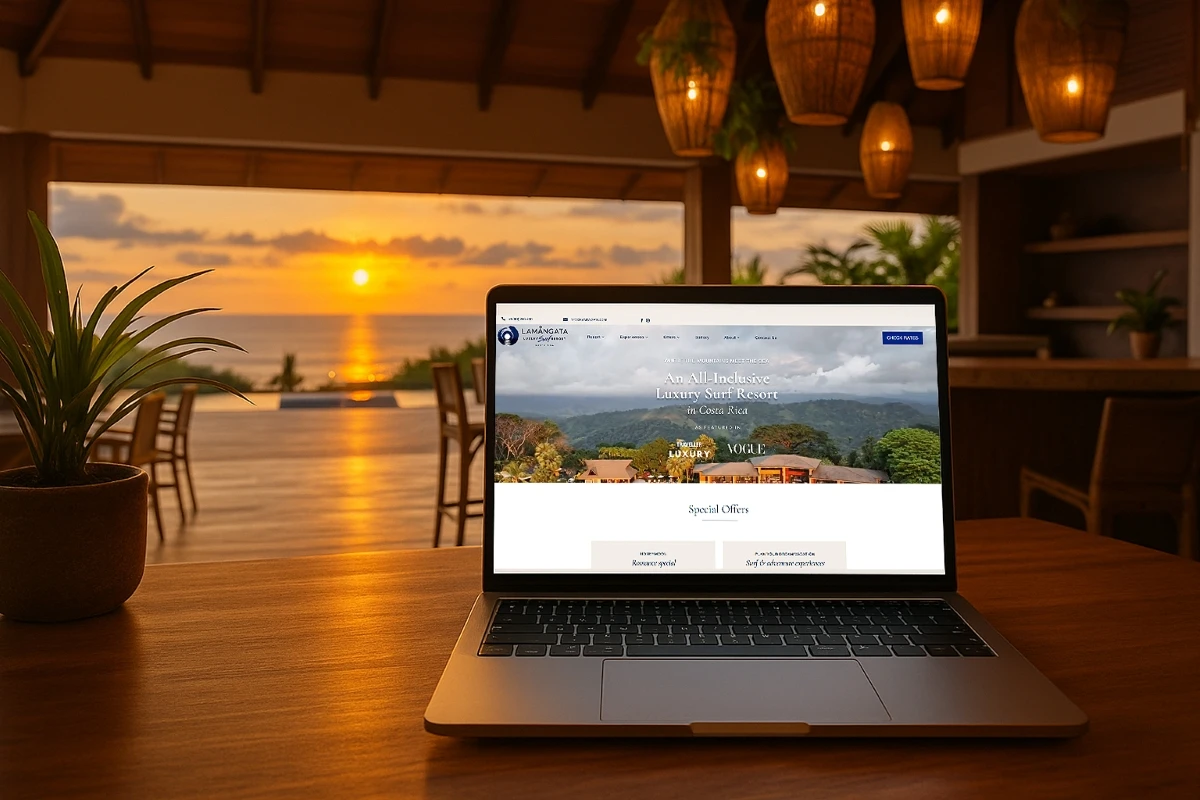
Take Lamangata Luxury Surf Resort. They were hesitant to invest in a new site because they had already poured time and money into one with another agency that left them disappointed. But the analytics were clear—visitors were confused and not booking. We rebuilt their site from the ground up: clear messaging that matched their premium positioning, imagery that finally reflected their property, and a booking flow that guided visitors naturally toward conversion. The best part? Bookings and inquiries improved within the first month of launching the new website.
You need to make sure your website is working for you, not against you. It should deliver the five-star experience travelers expect from the very first click.
2. Content Marketing for AI and SEO
Here’s what most people get wrong about AI optimization: they treat it like a completely separate discipline from SEO. In reality, strong AI visibility starts with strong SEO foundations. If you’re not ranking organically, it’s highly unlikely you’ll show up in AI search results either.
That said, there are key steps you can take in your website content to get ahead and increase your chances of being surfaced in AI results on platforms like ChatGPT, Perplexity, and others.
On the technical side, your site needs proper backend setup: correctly configured robots.txt files, schema markup, submission to Bing Webmaster Tools (ChatGPT’s primary data source), and LLMs.txt files. We handle these details for our SEO and content marketing clients to improve their AI visibility.
For your content itself, AI tools favor conversational, quotable information. That means using clear sections with logical structure, FAQs that answer common questions directly, and semantic keywords woven in naturally. Lists, tables, and bullet points improve readability, while concise, upfront answers (“In short: [answer]”) boost your chances of being pulled into AI snippets.
Just as important is making sure your priority pages are easy to find and well-linked internally. Orphaned pages—those with no links pointing to them—often never get indexed. Keep your content updated regularly and display last updated dates when possible; AI favors fresh, accurate information.
Visual elements also matter. Include images and videos with descriptive alt text and captions, since AI may reference them directly. Adding structured data like HowTo, FAQ, and Review schema helps both search engines and AI parse your content more effectively.
Finally, credibility is everything. AI rewards content backed by authoritative sources, clear citations, and data attribution. And remember: the simpler and clearer your writing, the more useful it is—for humans and for AI.
Not sure if your content is moving the needle? Get a free SEO audit here.
3. Social Advertising That Builds Relationships With Your Target Audience
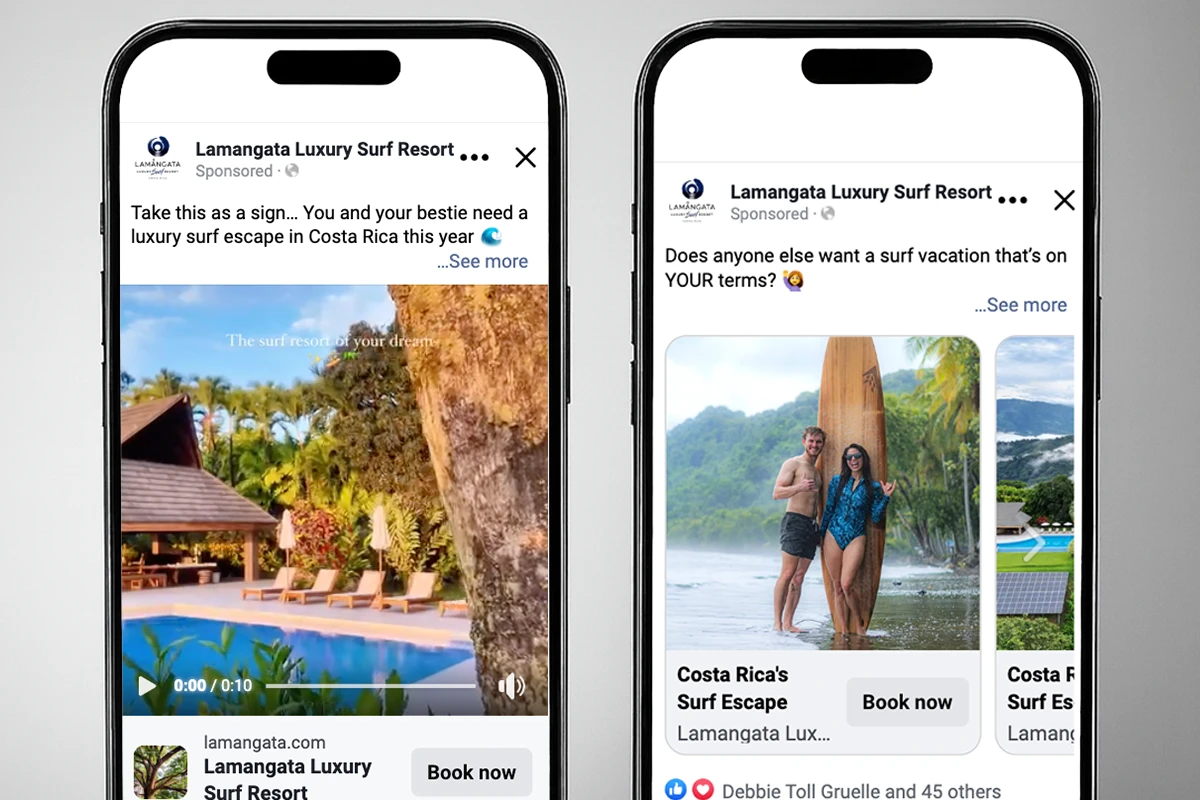
Social ads are the paid placements you run on platforms like Meta, TikTok, and YouTube to reach new audiences and stay top-of-mind with travelers already exploring your brand. The challenge is that many tourism businesses treat them as nothing more than discount billboards: “Book now and get 30% off.” That’s a quick fix, not a long-term solution. Discounts have their place depending on seasonality and goals, but if promotions are the only time you’re running ads, you’re leaving serious revenue on the table.
Effective social advertising takes a broader view. Travelers rarely book on the first touchpoint, but that doesn’t mean your ads aren’t working. The first exposure sparks awareness and curiosity. Remarketing builds on that momentum by adding trust, social proof, and the unique story of your experience. When done well, this sequence moves travelers from “looks interesting” to “we need to book this” much faster than you might expect.
That’s why we rotate which ads our remarketing audiences see daily. It prevents ad fatigue and builds a stronger connection by showing different sides of your brand story.
Here are a few high-performing examples:
- Destination content that captures your location’s beauty and atmosphere
- Behind-the-scenes moments such as your team prepping adventures or your chef creating local specialties
- Guest testimonials with authentic reactions from real stays or tours
- Unique package highlights that showcase experiences only you offer
- Free guides or articles that position you as the expert in your destination
- Remarketing sequences tailored to visitor behavior—suite browsers see luxury suite reviews, while adventure seekers see safety credentials and guide stories
- Abandoned cart recovery ads with personalized messaging that address concerns and offer help instead of blanket discounts
The aim is to create ad variations that align with where travelers are in their journey. Someone who just watched your destination video may not be ready to book immediately, but they could be ready to download your guide or learn more about your unique approach to luxury travel.
4. Search Engine Advertising & Pay-per-Click (PPC): The Key to Successful Tourism Marketing Campaigns

Search engine advertising—often called pay-per-click or PPC—lets you show up at the exact moment travelers are searching for trips, experiences, or accommodations like yours. Unlike social ads that interrupt someone’s scroll, PPC reaches high-intent travelers who are already planning. That’s what makes every click more cost-effective and measurable.
But running paid search ads that actually deliver bookings takes more than just bidding on a few keywords. The right campaigns pair smart keyword targeting with a high-converting website or booking flow. They also account for the long research process in travel, using remarketing to keep your brand visible to people who clicked but didn’t book the first time.
Where PPC really shines as one of the most effective tourism marketing strategies is in its adaptability. With ongoing optimization and automation, you can scale campaigns, improve ROAS, and maintain consistent visibility in highly competitive markets.
And the results multiply when you send travelers to landing pages designed for conversion. That’s how you turn high-intent searches into confirmed bookings.
Curious how this works in practice?
5. Go Beyond the Newsletter: Email Marketing That Actually Works

Email marketing remains a powerful tool for tourism businesses. Nearly every email user checks their inbox daily. According to Omnisend, 42% check three to five times a day, 28% check 10–20 times, and almost one in five check more than 20 times. That constant attention gives you a direct line to potential customers unlike almost any other channel.
What makes email one of the best tourism marketing tactics is its ability to build relationships over time. Travel decisions aren’t usually instant. Whether someone is weighing a luxury resort stay or a multi-day adventure tour, it often takes weeks or months before they commit. Email keeps you top of mind during that process, delivering the right message at the right moment.
Segmentation and personalization are where email truly shines; ensure your marketing includes these strategies. A luxury resort might segment by past stay preferences such as oceanfront versus garden view, while an adventure operator might segment by activity level or group size. When you tailor offers and content to each traveler’s interests, you increase the chance of conversion and build loyalty because your audience feels understood and valued.
Behavioral targeting takes this even further. By tracking opens, clicks, and conversions, you can see what travelers respond to and use that data to refine future campaigns. Every message becomes more relevant and effective.
And while social and search channels can eat up budget quickly, email remains relatively inexpensive while consistently delivering one of the highest returns on investment. If you want a channel that drives bookings without draining resources, this is it.
6. Visual Storytelling To Make Your Tourism Business Unforgettable

Every tourism business knows they need photos and videos. The problem is, few actually use them well. The brands winning right now aren’t churning out staged, “this could be anywhere” shots. They’re leaning into visuals that feel real, atmospheric, and rooted in place.
Especially with the rise of AI, potential travelers are craving brands and storytelling they can trust—and your visuals are one of the most powerful ways to deliver exactly that throughout booking decisions. Stock images won’t cut it. They don’t spark the emotional connection you need to sell an experience.
The difference between a photo that looks nice and one that makes someone think I need to be there often comes down to mood. Great photography and video don’t just document a space or activity—they capture a feeling. A half-opened book, steam rising from a coffee cup, a surfboard leaning in the sand, or light filtering through jungle leaves: these details transport people into the experience.
Authenticity also means letting go of the overly staged and over-edited. Skip the forced smiles and glossy symmetry. Instead, show guides in motion, guests mid-conversation, or a time-lapse of your chef preparing a dish. Let texture, shadows, and even weather play a role. These imperfect, candid moments are what give your visuals life.
Of course, if you can, invest in video marketing. Even a passionate staff member with a good iPhone can capture great footage for reels and stories, while professional video can take your brand storytelling to the next level. A sunrise reel on the trail, a guest testimonial captured in the moment, or moody footage of an evening wine ritual tells a story static images can’t. Tourism businesses that put effort into high-quality photography and video consistently see stronger engagement and higher conversion rates, with some studies showing lifts of up to 15 percent.
The goal is simple: create visual storytelling that feels specific, intimate, and unforgettable. Not catalogue-perfect, but lived-in. Not just documenting a destination or tour, but capturing the moments travelers crave inside it.
To help our clients succeed with travel photography and videography, we’ve created a free guide you can hand directly to your photographer.
7. Strategic Influencer Marketing Strategies That Work
Here’s our unpopular take on influencer marketing (spoken as former travel influencers): influencer campaigns rarely deliver direct ROI or immediate bookings. Their real value is in awareness and inspiration—laying the groundwork for future travel decisions.
Like PR, influencer marketing shines in building awareness and shaping long-term plans. Take my own experience: I’ve got about ten family-friendly Switzerland hotels saved from influencer content, but realistically I won’t book those trips for another two years. The point is, those properties are now on my radar. That’s the seed influencers plant.
Does that mean you’ll never see direct bookings or inquiries from influencer posts? Of course not—it happens. But don’t host an influencer with 500k followers and expect your doors to be slammed with potential visitors overnight.
Where you can see more immediate value is through content rights. If your contract allows it, the photos and videos influencers create can become some of your strongest marketing assets. A sunrise reel, a family hiking shot, or a cinematic property video might outperform everything else in your ad library—or bring your website to life in a way staged content never could. Just remember: not every influencer grants content rights, which is fair. That’s why contracts need to be crystal clear about what you can and can’t use.
And one more thing: bigger isn’t always better. A micro-influencer with 10,000 engaged adventure travelers is often far more valuable than someone with 100,000 generic lifestyle followers. The power lies in alignment, not vanity metrics.
8. Packages and Upsells: These Tourism Marketing Strategies Are a Game-Changer

Direct bookings are great, but if you only sell the standard booking, you’re leaving money on the table. Packages and upsells are one of the easiest ways to increase revenue per guest, whether automated on your website or handled through inquiry forms by trained staff. Training makes all the difference—we regularly help our tourism marketing clients equip their teams to respond to high-value inquiries in a way that actually converts.
Packages naturally raise the value of a booking while giving guests a better overall experience. A three-night stay can become a romance package with dining, spa, and activities included. A one-day tour can be bundled into a multi-day adventure. When framed as a better version of the trip they already want, upsells don’t feel pushy. They feel like upgrades.
So here’s the question: where are you leaving money on the table by focusing only on how to attract travelers, instead of also increasing the value of the guests you already have?
9. Integrated Tourism Marketing: The One Marketing Tactic You Can’t Overlook
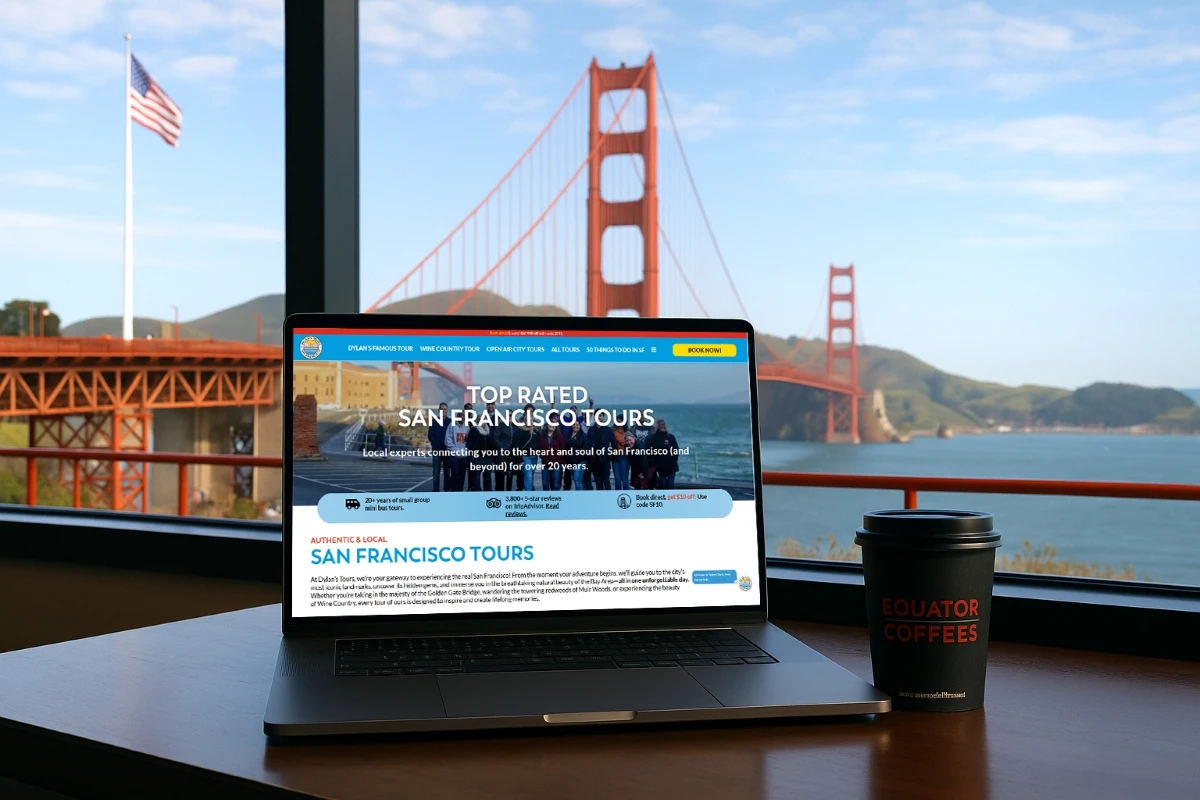
One of the biggest mistakes we see travel brands make is treating every channel like a silo. Email says one thing, ads say another, socials feel disconnected. Today’s traveler is seeing you everywhere—so your marketing has to tell one clear, consistent story.
That’s what integrated marketing means: every channel working together as part of a single, connected approach. Instead of scattered messages, you’re building one narrative that carries across platforms and creates momentum.
And integrated doesn’t mean doing more. It means making what you already create work harder. A TikTok reel can live again on YouTube Shorts. A blog post can be reshaped into a LinkedIn article or broken into Instagram captions. Content shouldn’t sit in a one-and-done bucket—it should carry across multiple touchpoints.
AI adds another reason this matters. Since these tools pull from a wide range of sources, showing up across channels makes you more discoverable. But the point isn’t to burn yourself out creating fresh content for every platform. It’s about a streamlined, cohesive approach where the same core message meets travelers wherever they’re looking.
At Untethered Media, we specialize in exactly that. As a full-service tourism marketing agency, we build campaigns that are consistent, on-brand, and connected across every channel. Each one feeds the others, creating momentum that drives bookings and long-term growth.
Ready to develop your tourism marketing strategy?
10. Social Media Strategy: Authenticity Over Perfection in Your Tourism Marketing Plan
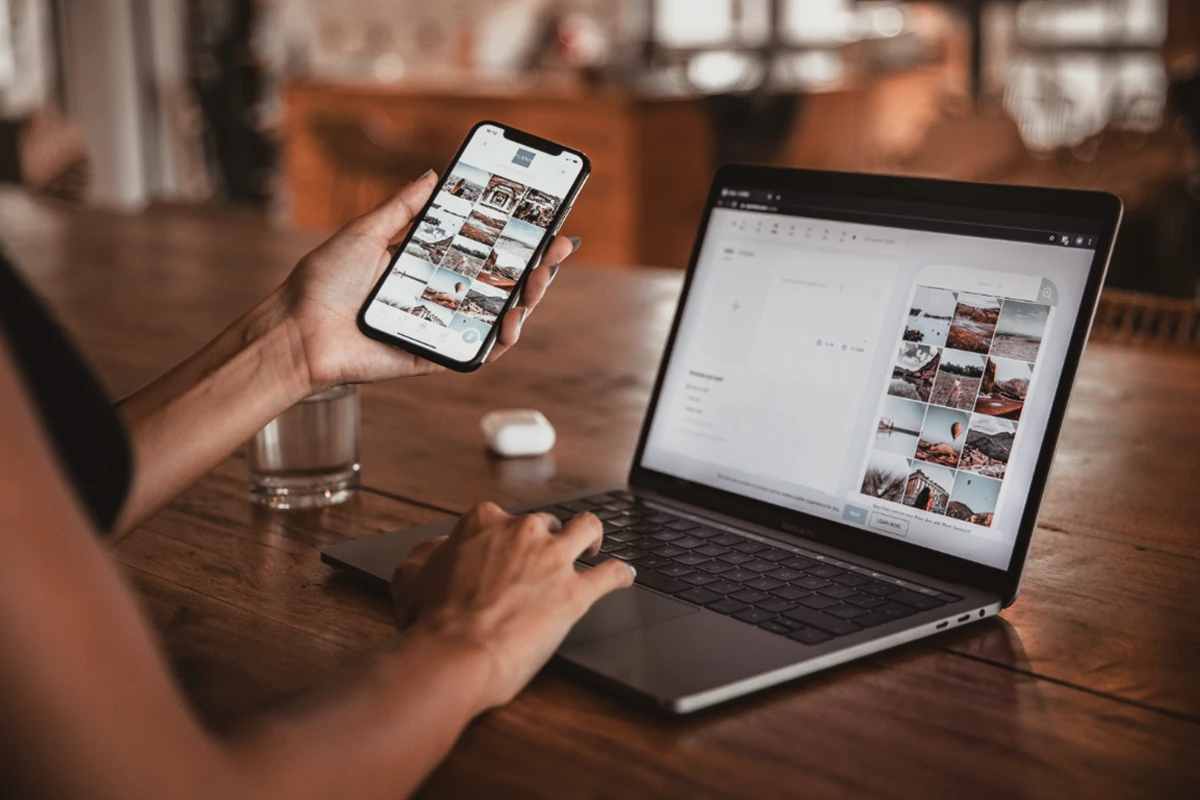
Social media platforms aren’t just where travelers scroll—it’s where they research, dream, and decide. The challenge for most tourism businesses is creating consistent social media posts when you barely have time to run your business, let alone plan a picture-perfect grid. The good news? You don’t need perfection. What matters is authentic, regular content that gives travelers a true sense of what it’s like to experience your brand.
According to Statista, 75% of travelers use social platforms to research and find inspiration for their next trip. That means your posts aren’t only about likes or views; they’re actively shaping decisions in the research phase, when travelers are choosing where to go and who to book with.
Quality still matters—especially in the luxury space—but it doesn’t mean polished perfection. Train your team to capture real moments: sunrise yoga, a chef sharing the day’s catch, or laughter during a tour. These snapshots spark connection and consistently outperform stock-style images.
And here’s a bonus many people overlook: Instagram posts can now appear in Google search results. That means captions double as SEO opportunities.
A simple hack is to search your topic on Google, check the “People also ask” section, and incorporate those questions naturally into your captions. For example, if you run a boutique hotel, work in phrases like “best romantic weekend getaway in [destination]” so your posts show up right when people are searching.
11. Local Partnerships and Collaborations Outside the Travel and Tourism Industry

Local partnerships are one of the most underused strategies in tourism marketing. Collaborating with restaurants, attractions, and other businesses gives travelers a richer experience while boosting your brand at the same time. The right partnerships let you offer more without adding extra strain to your team.
For example, a hotel might team up with a nearby restaurant to create a dinner-and-stay package that guests book directly through the hotel. A tour operator could partner with a local guide service to add a specialized excursion under their own brand. Even something as simple as including vouchers for a local café or spa in your packages keeps the spotlight on your business while giving guests more reasons to book.
The key is making sure collaborations either enhance your guest experience or put you in front of a new audience you wouldn’t otherwise reach—and ideally both. Guests should always see you as the connector that made their trip easier and more memorable, while your brand gains added visibility and credibility.
12. User-Generated Content for Marketing Messages and Customer Reviews That Drive Bookings
Travelers trust other travelers more than they trust brands. Guest photos, online reviews, and testimonials act as social proof that feels authentic—and that credibility can be the deciding factor when someone is on the fence about booking.
The key is to set up systems that make UGC easy and natural to collect while even enhancing the customer experience. That might mean creating photo-worthy spots on your property or tours, training staff to encourage reviews at the right moment, or sending a simple follow-up email asking guests to share their favorite photos.
We’ve also seen clients get creative. One hotel we work with gives professional photos to guests who share their Instagram handle, allowing the brand to tag them later. Guests almost always repost, which creates organic reach while keeping the experience polished.
The biggest shift comes when UGC becomes consistent rather than accidental. Think about where you can add small nudges—on-site, online, or post-trip—that encourage guests to create and share content you can repurpose to build trust and expand your reach.
13. Mobile Optimization Across the Booking Experience

Travelers are planning and booking on their phones more than ever. In 2023, mobile devices accounted for 68% of all online travel traffic, and by early 2025 nearly half of online hotel bookings were made on mobile.
Now think about the path a traveler takes. They might discover you on Instagram, click into a blog, explore your site, and eventually reach your booking platform—without ever touching a laptop. If that experience feels clunky at any point, you risk losing them.
Smooth navigation, clear forms, and fast payments all matter. Guests should be able to compare options, book with ease, tap to call or message with questions, and receive confirmation emails that display properly on a phone.
A mobile-first experience for the travel industry means designing every step of the journey with the phone in mind—not just shrinking a desktop site to fit a smaller screen. When the process feels seamless from discovery to booking, you reduce friction, capture more reservations, and give travelers confidence in your brand.
We help tourism brands redesign their sites with mobile-first in mind. Ready to boost your tourism marketing. Book a consultation to see how a seamless experience can increase your bookings.
14. Chatbots and AI-Powered Customer Service for Personalized Marketing
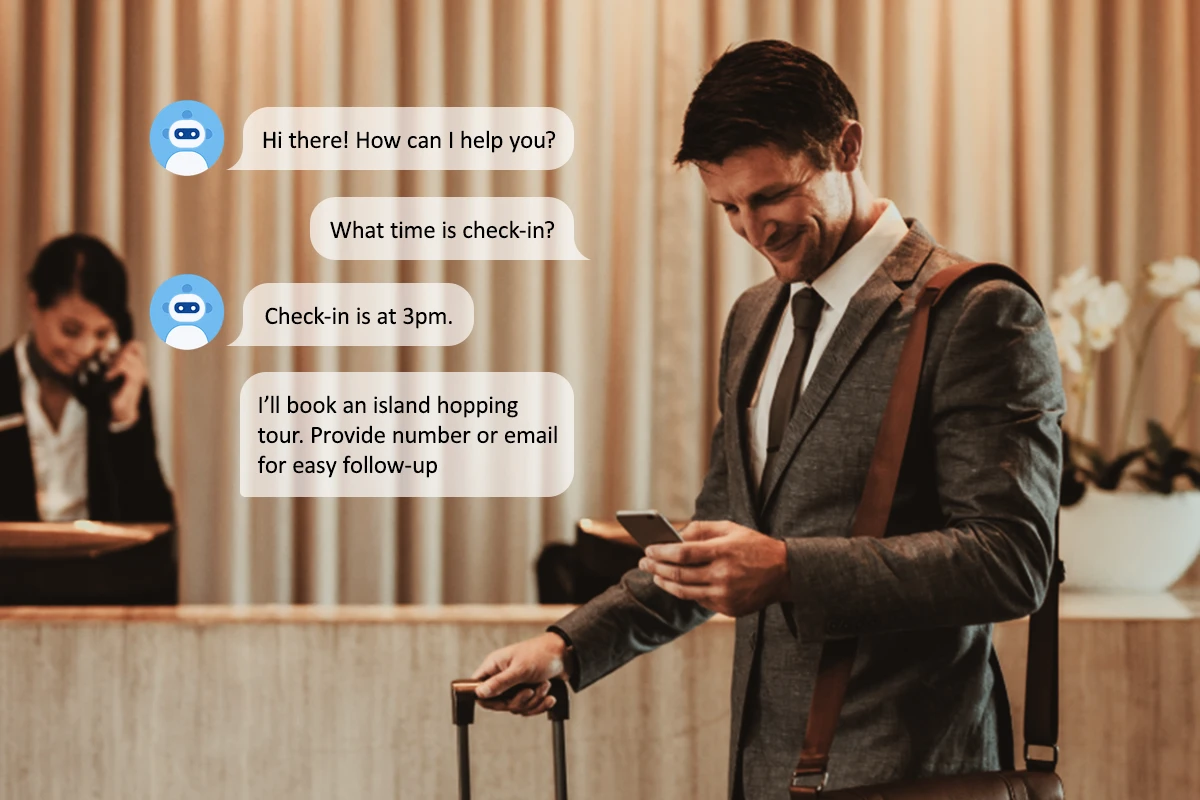
A well-designed chatbot can do more than answer questions—it can save your team time and help you capture bookings you might otherwise lose. For travel businesses, chatbots give instant answers, guide guests through the booking process, and collect details so you can follow up with high-value leads.
When we build custom tourism websites, we often include a chatbot that covers simple questions like check-in times, tour availability, or what’s included in a package. We also configure them to collect guest information such as a phone number or email, so your staff can quickly follow up and close the booking. That combination of instant response plus human touch works far better than letting an inquiry sit unanswered in someone’s inbox.
15. Data Analytics and Insights: Your Key to Real, Lasting Results + Revenue

You can’t measure what you don’t manage. Yet when we ask new clients how this year compares to last, most don’t actually know. They go off a feeling. The problem with feelings is they don’t reveal where revenue is leaking or where opportunities are hiding.
That’s where data changes everything. Many first-time clients are shocked when they see what the numbers actually say. You might have a beautiful website, but analytics could reveal that guests drop off at the booking engine because they can’t figure out how to add travelers. Your site traffic might look strong, but high bounce rates show people are leaving because the site is slow or confusing. Or maybe it feels like sales are down—yet the numbers show revenue is up, with rising costs quietly eating away at profit.
Numbers don’t lie. They give you the clarity to make smarter calls. Which pages do bookers visit before converting? What time of day drives the most inquiries? Which marketing channels bring in your highest-value guests? These aren’t guesses. They’re answers already waiting in your analytics.
Your Next Steps: Get the Right Tourism Marketing Strategies To Help Your Business Grow

You now have 15 proven ways to grow your tourism business. The challenge isn’t whether these tourism marketing efforts work—it’s knowing where to start, how to implement them, and which ones will make the biggest impact for you right now.
That’s where we come in. Our team helps tourism brands around the world cut through the noise and focus on the tourism marketing strategies that drive real bookings and revenue
Book a free consultation today, and we’ll show you exactly where to focus so you can start seeing results without wasting time on tactics that don’t matter.