


See how AI-driven search is reshaping the way travelers find, compare, and engage with travel brands. Learn how to strengthen your AI search visibility so you can position your brand ahead of competitors.
With more travelers using tools like ChatGPT and Google AI Mode to research, compare, and soon even book trips, the traditional journey from search to booking is changing quickly. What worked to drive bookings in the past will not automatically carry forward into 2026 and beyond.
That shift is why one of our biggest priorities with clients this year is building AI visibility now, while these systems are still evolving. Brands that act early have a clear advantage.
This guide explains why AI search visibility matters and outlines the exact steps we are taking with tourism clients to show up more often and more positively in ChatGPT and other AI search tools. Let’s dive in.
Feeling overwhelmed by how AI may impact your bookings and revenue? Request a free AI audit of your tourism website and marketing.
Why AI Search Visibility Matters in Tourism Marketing

How do you feel about the future of AI? Many of our clients are, understandably, torn.
On one hand, people increasingly rely on AI tools in their day-to-day lives. On the other, there’s growing frustration with generic — and sometimes inaccurate — guidance, along with the quiet erosion of website traffic as AI snippets repackage content, answer questions upfront, and leave little reason to click through.
And don’t even get us started on AI hallucinations.
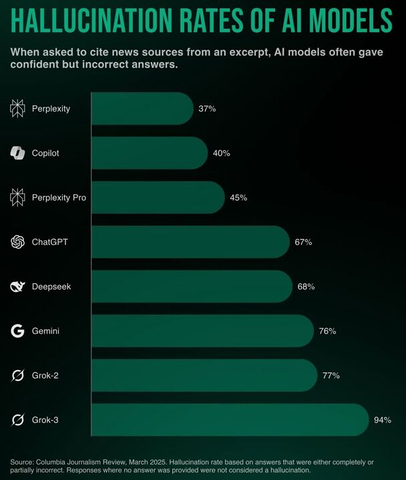
And yet, regardless of how you feel about AI, that doesn’t change the fact that traveler behavior is changing and AI visibility matters.
As more people are turning to tools like ChatGPT and Google AI Mode to explore destinations, evaluate brands, and book their travels, you risk being left out of the decision-making process entirely if your hospitality brand doesn’t show up in AI results.
Just take a look at these stats about AI search and the travel industry:
- Over 50% of travelers have used AI tools for trip planning, with adoption rising sharply year over year (Skift US Travel Tracker Survey, via McKinsey).
- 78% of travelers say AI improves their trip experience, and 66% believe it makes planning easier and more efficient (Sendbird, Statista).
- 60% of travelers are open to using chatbots or AI assistants like ChatGPT for booking or trip management (Mindful Ecotourism).
How AI Search Is Changing the Travel Customer Journey
As travelers adopt AI tools at a rapid pace, here’s how AI search is reshaping tourism marketing and the customer journey.
Google’s Canvas in AI Mode
While still in its early stages, Google’s Canvas in AI Mode is shaping the future of travel planning. It gives travelers a centralized place to build their trips with real-time flights, hotels, maps, photos, reviews, and activity options all organized in one workspace.
With Google moving toward direct bookings in Canvas, visibility becomes even more important. Travel brands need to show up inside these AI-driven planning spaces so they’re included in the itineraries and recommendations travelers create.
AI Search Will Reshape How Travelers Make Decisions
We can’t state this enough: AI search engines like ChatGPT are reshaping how travelers make decisions.
Instead of bouncing between traditional search results and multiple websites to compare options, travelers can now have a single conversation inside AI platforms such as ChatGPT or Google AI Mode.
Discovery, research, comparison — even early booking steps — are happening inside AI, which means your top-of-funnel traffic will not look the way it used to.
Here’s why this matters:
Your website will likely see fewer overall clicks, but the visitors who do arrive will come with higher intent because AI has already handled the research layer.
Visibility now comes from being the brand AI recommends, references, and includes in Google AI Overviews and conversational results — not just the one ranking at the top of a traditional search results page for “best whitewater rafting in Costa Rica.”
How AI Search Actually Works (Google vs LLMs)
Before we talk tactics, it helps to understand how Google AI differs from LLMs like ChatGPT and Perplexity — because they surface information very differently.
How Google AI Mode Generates Recommendations + AI Results
Google AI Mode combines elements of AI-powered search, real-time data, reviews, maps, and structured information to generate helpful travel recommendations. It’s not a traditional LLM, even though it uses advanced reasoning.
Instead, AI Mode relies heavily on Google’s search ecosystem, which means your presence in AI results is closely tied to the strength and accuracy of your online presence.
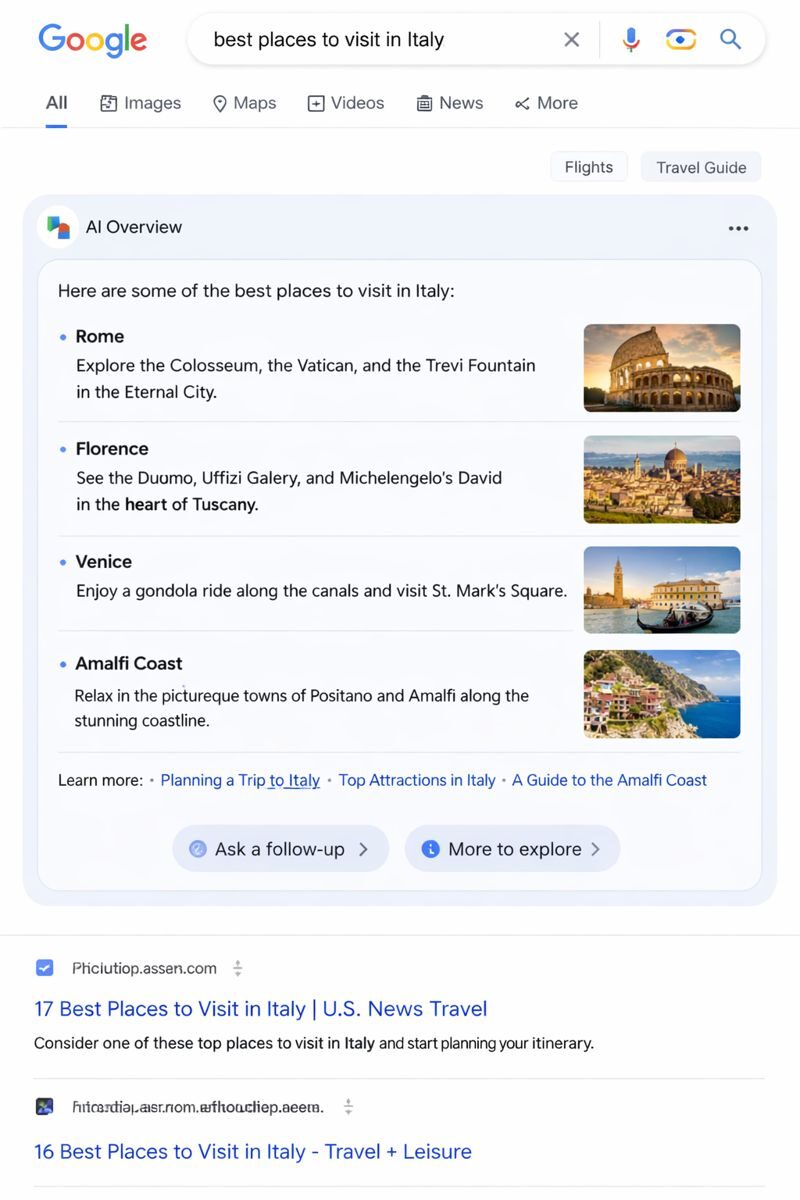
Here is a clear breakdown of how Google AI Mode works:
- Built on top of Google Search and grounded in real-time information.
- Pulls from Google’s index, Maps data, Business Profiles, Reviews, and the Knowledge Graph.
- Strongly influenced by traditional SEO signals such as structured data, E-E-A-T, freshness, and authority — all of which tie directly into modern AI SEO considerations.
- Prefers Google-owned and verified sources.
- Brands that perform well in organic search are more likely to appear in AI Mode recommendations, which reinforces the value of visibility tracking through SEO tools.
How LLMs (ChatGPT, Perplexity, Claude) Generate Recommendations + AI Results
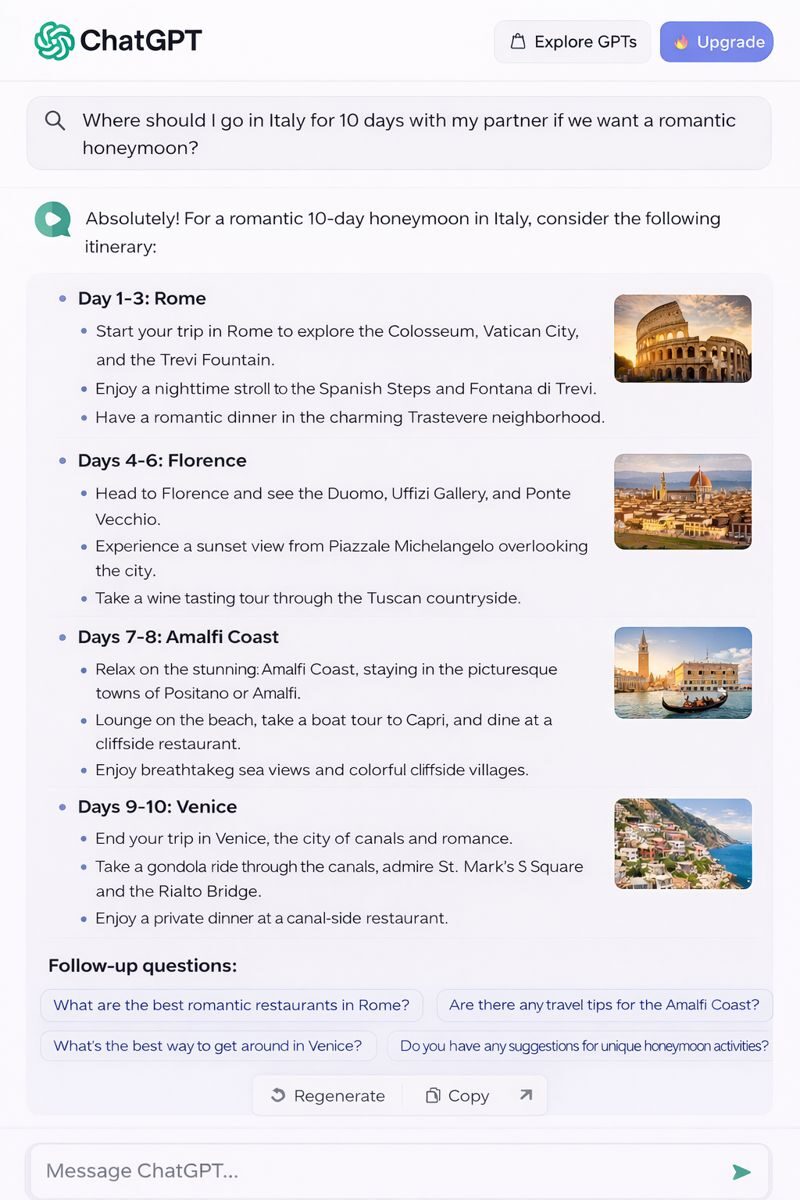
LLMs generate responses through a combination of training data, real-time retrieval, and pattern-based reasoning. They don’t operate like search engines and they don’t rank websites.
Instead, LLMs synthesize information from the sources they trust most based on authority, consistency, and how often that information appears across the web. This is why your presence in AI search is becoming just as important as traditional rankings — because LLMs choose what to recommend based on patterns, not positions.
As we move into 2026 and beyond, signals like E-E-A-T, freshness, and clearly structured content are becoming even more influential. LLMs are beginning to develop their own internal authority systems, which means brands with well-defined, frequently updated content will be referenced more often.
How LLMs Generate Recommendations
- LLMs like ChatGPT and Perplexity do not function as traditional search engines, and they do not rank websites in a list of results. Instead, they generate responses by synthesizing information from the sources and signals they encounter most often and trust most over time.
- The key takeaway is that LLMs surface brands based on repeated, trusted signals across the web, not traditional rankings. Brands that appear consistently in credible contexts are far more likely to be referenced in AI-generated answers, comparisons, and recommendations.

Your AI Visibility Playbook: 15 Ways to Show Up More Often in AI Search Results
Winning visibility in AI search — from Google AI Mode to LLM recommendations — requires clear, credible signals that AI systems can easily interpret and trust. The steps below break down what will matter most for AI search visibility in 2026 and beyond.
1. Help AI Understand and Recommend Your Brand
Before AI systems can recommend your brand, they need a clear, consistent understanding of who you are. That’s the role of entity definition: the recognizable identity of your business across the web — your name, what you offer, where you operate, and who you serve.
When tools like Google AI Mode or ChatGPT evaluate brands, they look for confirmation that you’re real, established, and trustworthy. If your information varies across platforms or your positioning is vague, AI confidence drops — and so does your likelihood of being recommended.
One of the simplest ways to strengthen your entity definition is to choose a small set of clear descriptors and use them consistently everywhere. For example: “eco-lodge in the Osa Peninsula for wildlife lovers,” “boutique hotel in downtown Asheville,” or “small-group adventure tours in Patagonia.”
When this same language appears on your website, Google Business Profile, OTAs, social profiles, and even in guest reviews, AI can more easily understand exactly who you are — and when to surface you.
Action Steps:
- Keep NAP (name, address, phone) fully consistent across your website, Google Business Profile, TripAdvisor, OTAs, directories, and social platforms.
- Use a clear, concise brand description everywhere so AI repeatedly encounters the same message about who you are and what you do.
- Ensure your website hierarchy is intuitive: your core offerings should be obvious, easy to navigate, and clearly described.
- Strengthen your presence on reputable third-party sites so AI can validate your business details (expanded in Section 2).
Pro Tourism Marketing Tip:
Ask ChatGPT, “What is [your brand name], who does it serve, and what are its core offerings?” If the answer is vague or incorrect, your entity signals need improvement.

2. Strengthen AI Trust With Authoritative Third-Party Mentions
AI systems look for proof that your travel brand is recognized beyond your own website. These third-party signals act as validation. When AI sees your brand mentioned across respected publications, industry sites, and niche travel outlets, it becomes far more confident recommending you.
As AI models mature, traditional backlinks matter less than brand citations — clear, consistent references to your business across authoritative sources. AI is less focused on link equity and more focused on who is being talked about, where, and in what context.
Mentions in respected publications, local media, tourism boards, and trusted industry directories now function as modern authority signals. The more frequently your brand appears in credible places, the more likely AI is to include you in itineraries, comparisons, and recommendation-style answers.
Action Steps:
- Earn mentions or features in reputable publications, travel blogs, or media outlets.
- Invest in digital PR to highlight your expertise, unique value, or destination insights.
- Showcase awards, certifications, or strategic partnerships that elevate your credibility.
- Maintain an updated “press” or “as seen in” page so AI can easily interpret and verify your authority.
Looking ahead to 2026 and beyond:
While Reddit and Quora have been heavily cited by LLMs to date, their influence is likely to decline as models like ChatGPT develop more sophisticated authority and trust systems.
As that shift happens, reputable news outlets and established industry publications will carry far more weight than high-volume forum content.
For travel brands, this means mentions in trusted sources such as Travel + Leisure, Condé Nast Traveler, AFAR, Lonely Planet, and strong regional publications will increasingly influence whether — and how — AI systems recommend you.
3. Use Reviews to Boost Trust and AI Recommendations
Reviews are one of the strongest trust signals in AI search. But it’s not just about how many you have — it’s also about what those reviews consistently say about your tourism brand.
AI systems analyze review sentiment, recurring language, and shared themes across traveler experiences. Brands with a steady stream of recent, detailed, and positive reviews are far more likely to be surfaced in recommendations, itineraries, and comparison-style answers.
Action Steps:
- Prioritize collecting reviews on Google, TripAdvisor, and the platforms most relevant to your niche.
- Encourage guests to share specifics about what they loved — details fuel positive sentiment signals.
- Respond to reviews regularly to demonstrate engagement and reliability (including negative ones).
- Track recurring feedback themes, as AI often surfaces these patterns when generating recommendations.

4. Maintain Fresh, Structured, High-Quality Content for AI-Driven Search
AI search still relies heavily on website content — even as direct clicks decline. LLMs and AI tools need accurate, well-structured information, which is why your tourism website should be treated as a data source, not just a traffic channel.
Travel brands that keep their content current send stronger signals of relevance and reliability. Outdated pricing, stale tour descriptions, broken links, or missing amenities all reduce AI’s confidence in recommending your business. In contrast, consistently refreshed pages signal that your brand is active, trustworthy, and aligned with real traveler needs.
In many cases, updating existing content is more valuable than creating new pages from scratch — especially when older posts already carry authority. The key is making meaningful updates that reflect today’s reality, not cosmetic tweaks.
Structured comparison content is especially powerful.
Travelers constantly ask questions like “Which neighborhood should I stay in?” “Is three days enough, or do I need five?” or “Should I book a group tour or a private experience?”
When your content clearly lays out trade-offs, pros and cons, and who each option is best for, you give AI an easy, trustworthy resource to reference. That makes your pages far more likely to surface in side-by-side recommendations and planning-style answers.
Action Steps:
- Regularly update important pages like tour descriptions, room details, FAQs, and policies.
- Audit your site for outdated information, missing amenities, seasonal changes, or discontinued offerings.
- Use clear formatting that makes content easy for travelers — and AI — to parse.
- Add structured formats such as FAQs, comparison tables, or “what to expect” sections to improve clarity.
Pro Tourism Marketing Tip:
When updating older blog posts, revise the content meaningfully and update the last published date.
While AI search engines like Perplexity and ChatGPT can detect substantial content updates automatically through technical signals, explicitly adding a “last updated” date boosts reliability, as AI tools and users prioritize consistent freshness cues.
5. Improve E-E-A-T Across Your Brand Ecosystem to Rank in AI
E-E-A-T (Experience, Expertise, Authoritativeness, Trustworthiness) has always mattered in search, but it’s becoming even more important as AI systems develop their own credibility signals.
This is especially true in categories where decisions carry real-world consequences. Travel is one of them: accuracy, safety, and reliable guidance directly affect the experience — which means AI needs clear proof that a brand truly knows what it’s talking about.
Experience
Experience comes from firsthand storytelling. With our clients, we focus on content rooted in real, on-the-ground details: what a sunrise actually looks like from a specific overlook, how a local guide prepares guests before a hike, or what meaningfully changes from one season to the next. These specifics signal lived experience rather than generic advice.
Expertise
Expertise shows up in how clearly information is explained and decisions are supported. When brands set expectations, explain trade-offs, outline options, and answer real traveler questions with precision, AI can see that the guidance is informed, intentional, and useful.
Authoritativeness
Authoritativeness, as discussed earlier, is reinforced through credible third-party validation. Mentions in trusted publications, industry outlets, tourism boards, and authoritative directories confirm that your expertise is recognized beyond your own website.
Trustworthiness
Trustworthiness is built through clarity and follow-through. When brands clearly describe what travelers can expect before booking and consistently deliver on those expectations, AI gains confidence in recommending them to the right audiences.
Action Steps:
- Use author bios or team profiles to demonstrate genuine expertise and on-the-ground experience.
- Publish in-depth guides, local insights, safety tips, and itineraries based on firsthand knowledge — not generic destination summaries anyone could write.
- Build topical authority by specializing in your region, travel style, or experience type.
- Make safety information, booking policies, and service details transparent and easy to access.
- Highlight certifications, professional memberships, guide qualifications, or sustainability commitments that reinforce trust.
- Showcase your operational experience (years in business, number of guests served, expert guides, local partnerships).
- Include behind-the-scenes content that demonstrates real people, real knowledge, and real experience within your brand.

6. Match Content to User Intent for Generative AI Results
Traditional SEO focused on finding the right keywords and trying to rank number one.
In an AI-driven landscape, travelers ask full questions, describe their concerns, and compare options in natural language.
AI tools prioritize content that directly addresses these questions — not pages optimized around a single keyword. That means your content must align with traveler intent, using clear structure, direct answers, and naturally embedded semantic language that AI can easily quote.
One of the most effective ways to signal fit is to spell out clear “if this, then choose us” scenarios.
For example: “If you want a quiet, walkable neighborhood near cafés, stay in our Little Italy apartments,” or “If you want small-group wildlife tours away from the crowds, choose our Corcovado itinerary.”
This problem–solution framing gives AI a simple rule it can reuse in recommendations.
You can strengthen this further by offering straightforward decision frameworks travelers — and AI — can follow. Guides that explain which neighborhood fits nightlife vs. food vs. quiet views, or when to choose a three-day itinerary versus a seven-day one, are especially reusable in generative answers.
As search becomes more conversational, individual keywords matter less than the topic ecosystem you build.
Instead of optimizing for isolated phrases, create connected content — itineraries, comparisons, FAQs, neighborhood guides, and “what to expect” resources — that reinforce one another.
AI evaluates this ecosystem as a whole, and brands with clear topical depth are the ones it trusts and recommends.
Action Steps:
- Use natural, conversational language that reflects how travelers actually speak.
- Add FAQs based on real guest questions — not just SEO-generated queries.
- Publish comparison guides, checklists, itineraries, and “what to expect” resources that support decision-making.
- Use semantic keywords strategically, weaving them in naturally rather than forcing them.
- Structure content with clear subheadings, short sections, lists, and tables to improve readability and AI extraction.
- Keep keyword research as a tool
7. Strengthen Your Video Presence Across Key Platforms for AI Optimization
When was the last time you booked a trip without watching at least one video first? Our team at Untethered Media are avid travelers, and we consistently use video to evaluate destinations, hotels, and tour operators before booking.
Short-form clips on TikTok, YouTube, and Instagram help people understand what an experience actually looks and feels like — something written content simply can’t fully convey.
That shift in behavior is now shaping AI as well. Tools like ChatGPT and Perplexity increasingly reference video because it offers clearer, more trustworthy context than text alone.
You don’t need high-budget production to benefit.
Simple, authentic videos filmed on-site — room walkthroughs, neighborhood views, guide introductions, seasonal conditions — can significantly strengthen your visibility across both AI search and social platforms.
Action Steps:
- Repurpose every video across TikTok, Instagram Reels, YouTube Shorts, and LinkedIn — distribution matters.
- Focus on simple formats: room walkthroughs, guide introductions, behind-the-scenes moments, itinerary highlights, or “what to expect” clips.
- Add descriptive alt text, captions, and filenames so AI can interpret your content more easily.
- Keep branding consistent across all platforms to reinforce recognition signals.
- Embed videos on key landing pages to help AI understand your offerings more clearly.

8. Improve AI Brand Visibility on Reddit, Quora, and Other Traveler Communities
Right now, platforms like Reddit, Quora, and niche travel forums play an outsized role in how LLMs form opinions about destinations and brands.
Tools like ChatGPT and Perplexity frequently reference these communities because they capture real traveler experiences, comparisons, and candid insights that brand websites often lack.
While their influence is likely to decline as LLMs refine their authority systems, these platforms are still among the most commonly cited sources today.
That means what travelers say about your destination or brand can directly shape how AI describes and recommends you.
This does not require self-promotion. What matters is that information about your brand is accurate, helpful, and aligned with the experience you actually deliver.
Think of these communities as live training data for AI search. Repeated answers to questions like “Is this tour worth it” or “Which area is best for first-time visitors” help form the narratives AI later reuses. Helpful, honest participation reduces the risk that an outdated or inaccurate thread becomes the default story.
Action Steps:
- Participate thoughtfully in relevant Reddit, Quora, or forum threads where travelers are already asking questions that you can genuinely help answer.
- Correct misunderstandings or outdated information when you see it, especially about your destination, policies, or offerings.
- Encourage happy guests to share their experiences in the communities they already use.
- Pay attention to recurring themes or concerns. AI models pick up on sentiment patterns and use them to shape recommendations.
Pro Tourism Marketing Tip:
Use ChatGPT or Perplexity as a lightweight social-listening tool. Ask questions like:
- “What are travelers saying about [your destination] on Reddit?”
- “Summarize common opinions about [your brand] across forums and review sites.”
- “What concerns or questions do travelers most often have about [experience/destination]?”
These tools won’t show every conversation, but they’ll surface the themes and narratives AI is detecting — which is exactly what you want to influence.
9. Optimize Your Google Business Profile
Your Google Business Profile (GBP) is one of the strongest signals Google AI uses when evaluating travel brands. Because Google grounds its AI outputs in verified, Google-owned data sources, GBP often becomes the primary reference for photos, reviews, amenities, hours, and location accuracy.
As Canvas in AI Mode expands, GBP will matter even more. Google is moving toward personalized, preference-based trip planning inside AI environments, where travelers might ask for a boutique hotel near top restaurants, small-group tours that include wildlife viewing and moderate hiking, or accommodations with hot springs access and mountain views.
If your GBP is incomplete, outdated, or lacking detail, you risk being excluded from these AI-driven recommendations entirely.
Action Steps:
- Keep your Google Business Profile fully updated with accurate amenities, hours, pick-up details, policies, and seasonal notes.
- Upload high-quality images that show what travelers actually experience: rooms, views, activities, guides, food, neighborhoods, etc.
- Use Google Posts consistently to signal freshness.
- Complete all applicable attributes and services (accessibility, room types, languages, tour categories, kid-friendly options, etc.).
- Encourage reviews that mention specifics (“close to restaurants,” “great for families,” “amazing for food lovers,” “perfect for couples,” etc.). AI Mode pulls these themes directly into recommendations.
- Respond to all reviews to strengthen trust signals.
- Make sure your map pin is precise, especially for tour meet-up locations.
Pro Tourism Marketing Tip:
Treat Google Posts as real-time signals for AI. Short, timely updates (“Spring wildflower hikes now open,” “Chef’s tasting menu for March now live”) help Google understand what’s currently relevant — and increase your chances of being selected for personalized trip recommendations inside Google Canvas.

10. Strengthen Your Local SEO Signals
Your Google Business Profile is just one part of local SEO. To show up in AI search for location-based queries, your tourism website also needs clear, consistent signals about where you operate, what’s nearby, and which types of travelers you’re the best fit for.
If your site doesn’t provide this level of context, AI has very little to work with — even if your GBP is fully optimized.
Action Steps:
- Create detailed location and neighborhood pages. Include nearby restaurants, landmarks, access points, seasonal notes, and who each area is ideal for.
- Add practical local information such as directions, parking, meet-up points, transit options, and walking distances. These details frequently surface in AI summaries.
- Weave local context into key pages instead of siloing it. Mention neighborhoods, districts, and points of interest throughout your site.
- Earn local backlinks from tourism boards, DMOs, regional magazines, chambers of commerce, or niche blogs. These validate your local relevance to AI.
- Use natural geographic language (neighborhood names, colloquial terms, regional phrases) to help AI associate your brand with specific areas.
- Ensure maps and directions are accurate and easy to follow, especially for tours and remote accommodations.
11. Use Schema Markup Effectively for Visibility Across ChatGPT and Google AI
Schema markup is structured data added to your website’s code that labels your content in a way search engines and AI tools can read with certainty. Instead of guessing what a page represents, schema explicitly tells AI what your business offers — whether that is hotel rooms, tours, amenities, inclusions, FAQs, reviews, or availability.
Think of schema as metadata that turns your website into a clean, machine-readable source.
When this information is present and accurate, AI systems can reference your brand with far more confidence in recommendations, comparisons, and itinerary-building tools.
Action Steps:
- Validate your schema regularly using Google’s Rich Results Test or Schema.org validators to ensure no errors or duplication.
- Keep your structured data updated as amenities, inclusions, availability, or policies change. Outdated schema sends mixed signals to AI tools.
- Use FAQ schema to mark up clear answers to common traveler questions — AI often pulls from these when generating summaries.
- Ensure consistency across platforms (website, GBP, OTAs). AI cross-checks details like pricing, availability, and amenities, and inconsistencies reduce trust.
- Reinforce your entity definition by marking up your business information cleanly and consistently across the entire site.

12. Improve Technical SEO Foundations to Show Up in AI Answer Engines
AI search still depends on strong technical SEO foundations.
If your website is slow, difficult to crawl, or poorly structured, AI tools have a harder time accessing and interpreting your content, which limits how often you appear in AI-driven results.
Clean site architecture, clear internal linking, fast load times, and proper indexing ensure your content can be discovered and understood by both search engines and AI systems. These technical fundamentals make it possible for AI to surface your pages in planning, comparison, and recommendation-style answers.
Action Steps:
- Increase page speed, with a focus on mobile performance. Faster pages get crawled more often and indexed more reliably.
- Ensure full mobile optimization, since most travelers research and plan on their phones.
- Fix broken links, outdated redirects, and missing pages, as these create accuracy issues for AI systems.
- Use clear internal linking so crawlers and AI tools can understand the hierarchy of your content and your core offerings.
- Avoid duplicate content, especially across similar tours, room types, or itineraries. Use canonical tags where appropriate.
- Check indexation regularly to confirm your most important pages are being recognized by search engines and AI tools.
- Simplify your site structure with intuitive navigation, clean URLs, and logical content groupings.
- Maintain strong site security (HTTPS and proper configurations) to reinforce trust and reliability.
Pro Tourism Marketing Tip:
Want to identify a few simple technical issues that could be quietly costing your travel brand tens of thousands in lost bookings? Get a free tourism website audit here.
13. Build a Strong Social Footprint
Your social media presence is an important signal AI systems use to understand your brand. Active, consistent social posts give AI clearer insight into your personality, the experiences you offer, and how travelers engage with you in real time.
This does not mean creating unique content for every platform or throwing ideas at the wall to see what sticks.
Instead, we use what we call the Content Multiplier: developing strong pillar content and repurposing it strategically so one high-quality piece can be adapted into dozens of assets across social platforms.
This approach allows brands to maintain broad visibility and consistency without spreading themselves thin. The result is omnipresence with intention — clear, repeatable signals that reinforce your brand wherever travelers and AI systems are paying attention.
Action Steps:
- Post consistently on the platforms that align with your audience (Instagram, TikTok, YouTube, Facebook, LinkedIn). Consistency signals brand health and ongoing relevance.
- Share guest stories, behind-the-scenes moments, and on-the-ground experiences so AI can interpret your brand through real interactions — not just static website copy.
- Highlight team expertise and local insight to reinforce Experience and Expertise (E-E-A-T) signals in a natural, human way.
- Use captions that describe context clearly, including keywords, destination details, activity types, and who each experience is best suited for.
- Respond to comments and messages regularly. High engagement is a strong activity signal across platforms and strengthens digital trust.
- Strategically repurpose content across platforms to maintain visibility without adding workload. The same Reel or TikTok can be used on YouTube Shorts and LinkedIn.
- Keep visuals and voice consistent so AI (and travelers) can easily identify your brand across the web.

14. Use AI Search to Understand Traveler Planning Behavior
You can’t optimize for a system you’ve never actually used.
The more comfortable you become with AI tools in your everyday life — for planning, learning, brainstorming, and decision-making — the easier it is to understand how travelers use them too.
That familiarity removes hesitation and reveals patterns: what AI prioritizes, how questions are framed, and why certain brands surface more often than others.
This kind of understanding doesn’t come from an SOP. It comes from hands-on use. That’s why we invest heavily in AI training for our own team. Fluency with these tools makes it far easier to adapt marketing, content, and brand presence to an AI-driven landscape.
Action Steps:
- Ask your team to use ChatGPT, Perplexity, and Google AI Mode regularly — not just for travel, but for everyday tasks.
- Explore travel-related prompts to see how AI compares options and explains destinations.
- Pay attention to which brands show up repeatedly and note the patterns in their content, reviews, and positioning.
- Experiment with different prompt styles to see how traveler questions shape results.
- Look for gaps where your brand should appear. Those gaps highlight opportunities.
15. Monitor and Measure Your AI Visibility Index
AI visibility is becoming a key performance metric for travel brands, but tracking it is still in its early stages. Most AI visibility tools are new, evolving quickly, and far from perfect.
Even so, they offer a clearer view than ever before — and a useful benchmark for measuring progress as these systems continue to evolve. These platforms show how often your brand appears in AI-generated answers, which competitors earn more mentions, and what narratives AI surfaces about your destination or offerings.
While they are not yet as mature as traditional SEO tools, they provide valuable directional insight that can inform a smarter search strategy for 2026 and beyond.
Action Steps:
- Use emerging AI visibility platforms like Profound, Scrunch, Peec, and others to track how your brand appears across ChatGPT, Google AI, Perplexity, and similar tools. These platforms vary in accuracy, but they offer early AI search monitoring that did not exist until recently.
- Track changes in branded search, sentiment, and AI-driven referrals to understand how traveler behavior is evolving. Tools such as SEMrush AI are beginning to layer AI insights on top of traditional SEO reporting, helping you see how your brand surfaces across different search environments.
- Monitor competitors across AI systems to identify who is gaining visibility and why. Understanding their AI footprint allows you to adjust positioning, content, and authority signals with greater precision.
- Document AI responses over time, especially for prompts closely tied to your niche. AI outputs change frequently, and maintaining a record helps you spot trends, measure progress, and understand how updates affect your visibility.
AI Visibility Matters: Position Your Travel Brand for Success Today
AI is reshaping how travelers discover, compare, and choose travel brands. The brands that succeed are the ones building clear, consistent signals that AI systems rely on when generating recommendations.
This guide lays out a practical playbook for improving visibility in AI-driven search, based on how these systems already work and how they are evolving.
The advantage will go to travel brands that act early, strengthen their digital footprint, and adapt as AI search continues to change.
If you want help turning this framework into an execution plan that protects bookings and drives growth, get in touch today.