


Travelers are forming opinions about your brand before they ever see your website.
AI-powered search tools like Google and ChatGPT are now explaining, comparing, and recommending experiences — quietly shaping decisions before a single click happens and dramatically changing the search experience.
Instead of browsing multiple websites, travelers are increasingly asking follow-up questions and getting targeted answers directly from generative AI search results. By the time someone lands on a tourism website, they might be arriving to confirm a decision, not explore options.
This AI shift fundamentally changes how tourism marketing, SEO, and web pages work together.
Your website is no longer just a traffic destination; it’s a primary source of data that AI-powered search engines rely on to understand, summarize, and recommend your brand.
When that information is unclear, outdated, or poorly structured, those systems pull context from elsewhere — and you risk losing high-value bookings to the more visible competition.
This article breaks down how AI-driven search is reshaping the tourism customer journey, what visibility actually means in this new landscape, and how tourism brands can adapt their websites and tourism marketing strategies to stay competitive.
Traditional Search Engines Are Changing
Traditional search used to be the place where discovery began. Travelers searched, clicked, explored a handful of websites, read blogs, and compared their options.
AI is fundamentally changing that process.
Today, Google AI mode and large language models like ChatGPT and Perplexity often summarize the landscape for the traveler before they ever visit a website.
Instead of opening ten tabs, travelers ask conversational, long-form questions like “What’s the best boutique hotel in Santa Fe?” or “Which tour is right for families?” and receive a synthesized answer.
In traditional Google search, this now shows up as AI-generated previews and summaries that sit above traditional listings. These overviews explain differences, highlight recommendations, and surface a short list of options — effectively influencing a traveler’s decision before the first click on the results page ever happens.
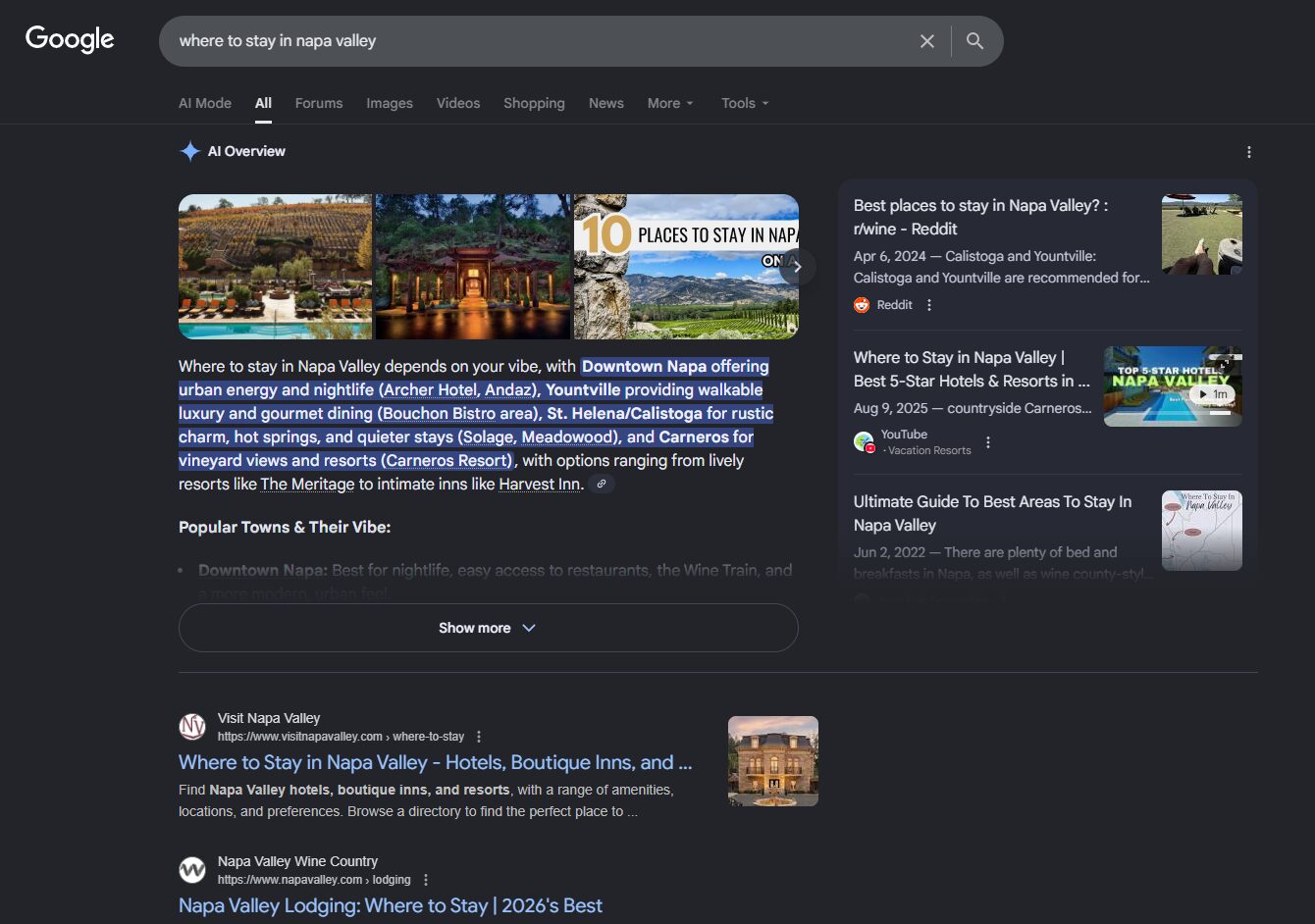
When a traveler does click through to a tourism website, they’re often confirming a decision that’s already been narrowed. Brands that aren’t clearly represented in AI-generated summaries may never enter the consideration set at all.
That’s why search visibility today isn’t just about ranking or traffic. It’s about how — and whether — your tourism brand shows up at the moment decisions are being formed.
Does your tourism website still matter? Absolutely!
Without a high-converting website and clear brand signals with up-to-date, relevant information, your business risks being misrepresented — or excluded entirely — in AI-driven search results.
If you’re wondering how to influence what Google AI and tools like ChatGPT say about your brand, our Ultimate Guide to AI Visibility breaks down where to focus and what to prioritize for success in traditional search and AI.

The Customer Journey Is Shorter — and More Informed
The tourism customer journey hasn’t disappeared, it’s been compressed.
Travelers still care about fit, trust, and expectations. What’s changing is how quickly they move from question to conclusion. Research that once took days can now happen in minutes.
Instead of searching for a keyword and reading multiple articles to understand a destination or experience, travelers increasingly ask search systems to summarize the tradeoffs for them. Instead of manually comparing brand websites, they receive curated answers and recommendations specific to their unique preferences.
By the time a traveler reaches your website, they arrive with context, expectations, and a narrowed set of options.
For tourism marketing, a shorter customer journey means less room to correct confusion later. Brands need consistent, trustworthy signals that show up clearly in AI-driven search — and a website that provides both the data AI needs and the confidence travelers need to book.
Learn how to market effectively across the customer journey with proven strategies to attract travelers, build trust, increase bookings, and boost revenue.

Your Tourism Website Still Does the Heavy Lifting for AI-Powered Search
AI-powered search hasn’t made tourism websites obsolete. It’s raised the bar for what they need to do as travelers search for information.
Your website still feeds AI systems the information future guests rely on to understand and recommend your brand — but it’s also still your most important decision-making tool once a traveler is ready to book. In many cases, it’s both the input and the final checkpoint.
That means with the growing popularity of AI, your website can’t just look good. It needs to communicate clearly, build confidence quickly, and move travelers toward a decision without friction.
When we review tourism websites, we consistently see the same issues holding brands back:
- It’s not immediately clear who you are, what you offer, or who your experience is for — and that language isn’t repeated consistently across the site
- Photography and videography aren’t strong enough to actually sell the experience. If this is a gap for you, our free Hotel Photography & Videography Guide outlines what visuals matter most in tourism — and how to use them effectively.
- Pricing, availability, or booking details are hard to find or unclear, and there are no AI chatbots to answer FAQs.
- Reviews, testimonials, press mentions, and other trust signals are missing or buried
- Contact information and key details are inconsistent or outdated
- The mobile experience is slow, clunky, or frustrating
- There’s little to no structured data to help AI systems accurately interpret the content
If you want to see what a high-converting tourism website looks like in this new landscape, our Tourism Website Makeover Checklist breaks down the specific elements that help AI understand your brand clearly and help travelers move confidently toward booking.

Zero-Click Search Doesn’t Mean Zero Opportunity from ChatGPT and AI Overviews
Zero-click search is often framed as a loss — fewer clicks, less traffic, and less control.
And for tourism brands that have invested years into content, that frustration is real. Seeing AI-powered results summarize your hard work without sending the same volume of traffic can feel like the rules changed overnight.
But that framing misses how AI-driven search systems actually work — and where opportunity still exists.
Even when answers appear directly in Google’s AI Overviews or in tools like ChatGPT instead of blue links, those systems don’t invent information from nothing. They rely on existing content to understand experiences, compare options, and make recommendations. Authoritative pages, clear descriptions, strong reviews, and consistent brand signals still shape what gets surfaced — and what gets left out.
Google’s “Things to Do” results are a clear example. For many experience-based searches, Google now displays tours, activities, pricing, reviews, and photos directly in the results, often before traditional organic listings.
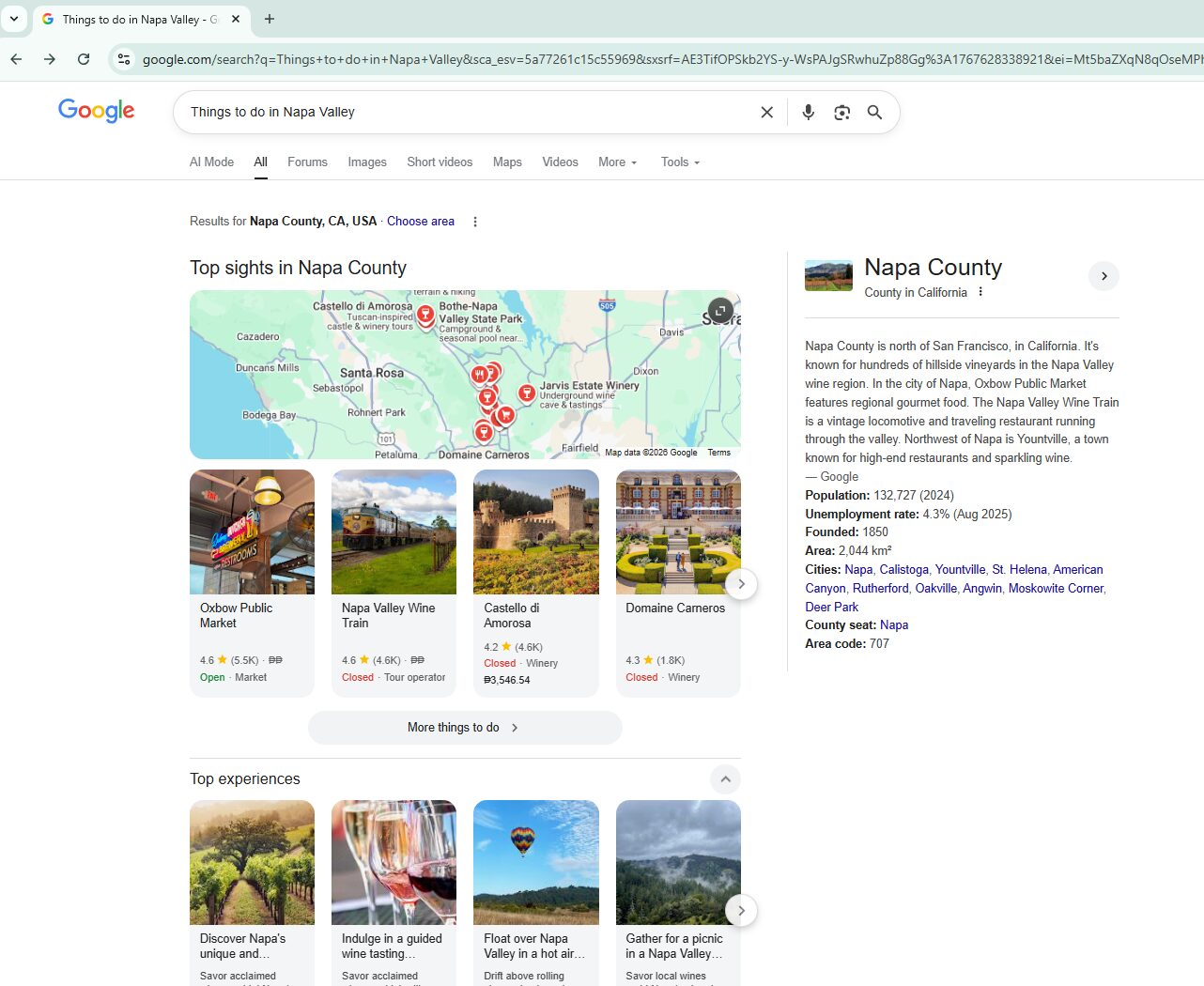
If your experience is included and accurately represented, you still influence perception and shortlisting — even if the traveler doesn’t click immediately. If it’s missing or poorly defined, your brand may never enter the consideration set at all.
What’s changed is not whether content matters — it’s how your content creates value.
In tourism marketing today, influence often matters more than raw traffic from classic search engines.
In other words, being clearly and accurately referenced by AI systems matters more than being seen by everyone. Brands that continue to drive bookings in a zero-click environment are the ones that give different search systems strong, consistent material to work with — so AI features can confidently recommend them and send high-intent travelers their way.
SEO Is Expanding, Not Disappearing
Traditional search methods emphasized rankings and clicks. Modern AI tools place greater emphasis on clarity, structure, authority, and consistency across the web—especially as search results now include AI Overviews, visual modules, and experience-based features.
Search systems evaluate brands based on how clearly they are defined, how consistently they appear in trusted contexts, user functionality, and how well their content answers real traveler questions intelligently.
For tourism brands, this includes:
- Clear descriptions of experiences and audience fit
- Content that supports comparison and expectation-setting
- Accurate information aligned across platforms
- Signals of real-world experience and credibility
SEO strategy can no longer operate in isolation. It must work alongside brand strategy, content strategy, and website design, especially as people are using AI systems like a copilot to generate transformative travel experiences in real-time.

Content That Supports Decision-Making Performs Better Than Trends
In a compressed customer journey, not all content carries equal value.
Content that helps travelers understand tradeoffs, set expectations, and make decisions carries more weight than content designed purely to drive traffic.
AI search systems favor content that is easy to extract, validate, and summarize, including:
- Clear headings and structure
- Direct answers to common questions (Consider voice queries and long-form questions)
- Comparison-style explanations that enhance user engagement
- Natural language descriptions
This type of content benefits both AI systems and human readers.
FAQs Play a Larger Role in Artificial Intelligence
Well-written FAQs reflect real traveler language and answer questions the way people actually ask them—closely mirroring how AI systems interpret and surface context-aware information.
Strong FAQs help:
- Reduce uncertainty before booking
- Reinforce trust and transparency
- Shape how your brand is summarized elsewhere
For tourism brands, FAQs often address logistics, suitability, seasonality, accessibility, pricing structure, and experience level. When these answers are clearly available on your site, they influence how your brand is represented across search environments.

Visibility in Gemini and AI Is Increasingly About Citation
In AI-driven search, visibility is less about being ranked and more about being referenced.Let’s dive deeper.
Search systems look for repeated, trustworthy signals across the web. Brands that appear consistently — with clear descriptions, aligned messaging, and credible validation — are far more likely to be cited in AI summaries, comparisons, and recommendations.
When your website, reviews, listings, and third-party mentions reinforce the same story, your brand becomes easier for AI systems to understand, trust, and reuse.
If you want practical guidance on how to improve that visibility, our Ultimate Guide to AI Visibility breaks down the specific actions tourism brands can take to ensure their websites, content, and brand signals are accurately represented across Google AI results and tools like ChatGPT.
What This Means for Your Tourism Marketing Strategy
The future of tourism marketing rewards clarity over volume — and consistency over shortcuts.
Brands and tourism marketers that perform well in this environment will:
- Treat their travel website as both a conversion tool and a signal AI relies on
- Align SEO, content, and brand messaging instead of managing them in silos
- Focus on influencing understanding earlier in the journey
- Reduce ambiguity across platforms so both travelers and AI systems reach the same conclusion
This doesn’t require abandoning traditional SEO or rebuilding everything at once. It does require a tailored approach and understanding how modern search systems interpret, summarize, and compare information — and adjusting with intention.
Final Thoughts on the Future of AI Search Engines
Tourism brands that communicate clearly, stay consistent, and take action now will be best positioned to improve their AI visibility.
If you want help navigating this shift — aligning your website, integrated tourism marketing strategy, and brand presence so your business stays visible and competitive as AI-driven search continues to grow — we’d be happy to take a look together.
The Luxury Hotel Photography & Videography Guide
Tourism Website Makeover Checklist
Is your website costing you bookings? This checklist reveals the exact trust-builders, design tweaks, and conversion triggers that turn casual browsers into paying guests — so you stop leaving money on the table.